Why the Civil War Didn’t Start the Way Most People Are Taught
Read Nonfiction publishes nonfiction book reviews focused on history, politics, economics, and the human condition.
For generations, the origins of the American Civil War have been taught through simplified narratives that reduce a complex national crisis to a single cause or moral slogan. While certain issues were undeniably significant, the historical record reveals a far more intricate combination of political power struggles, economic policy conflicts, constitutional disputes, and sectional tensions that developed over decades — not overnight.
Understanding why the Civil War began requires moving beyond textbook summaries and examining the broader context in which decisions were made, laws were enforced, and regional interests collided. This site exists to explore those deeper layers using documented, nonfiction sources rather than ideology or modern reinterpretation.
The Problem With Oversimplified History
History is often taught backward. We start with the outcome-War-and work our way back using moral conclusions formed afterward. This approach can unintentionally obscure motivations, pressures and decisions that historical figures faced in real time.
In the decades before 1861, the United States were divided by:
- Sharp regional economic differences
- Tariff and Trade Disputes
- Constitutional disagreements over federal authority
- Political realignments and party collapses
- Growing distrust between North and South
These tensions developed over decades, not months.
Economic and Political Pressures before Secession
By the mid-19th century. The Northern and Southern states were operating under fundamentally different economic models. The North increasingly relied on manufacturing and protective tariffs,while the South depended on agriculture and international trade.Federal tariff policy, banking control. And internal improvements were not abstract issues—fhey affected livelihoods. Regional power and political representation, When Southern states debated secession. They did so within this broader context of perceived economic disadvantage and political marginalization.
Understanding these pressures helps explain why secession occurred when it did. Rather than decades earlier or later.
A Closer Look at the Historical Record
Many primary sources—speeches, congressional debates, letters and state declarations—reveal motivations that are rarely discussed in modern summaries. These records show leaders grappling with constitutional limits, economic survival, and the future structure of the Union. One work that brings together these lesser discussed factors in a single, well-documented narrative is The Civil War, the real beginning by Nena & Alex Jordan. Rather than focusing on slogans or hindsight judgments, the book examines the chain of events leading up to secession, and war using economic data, political actions, and original source material
Featured Book
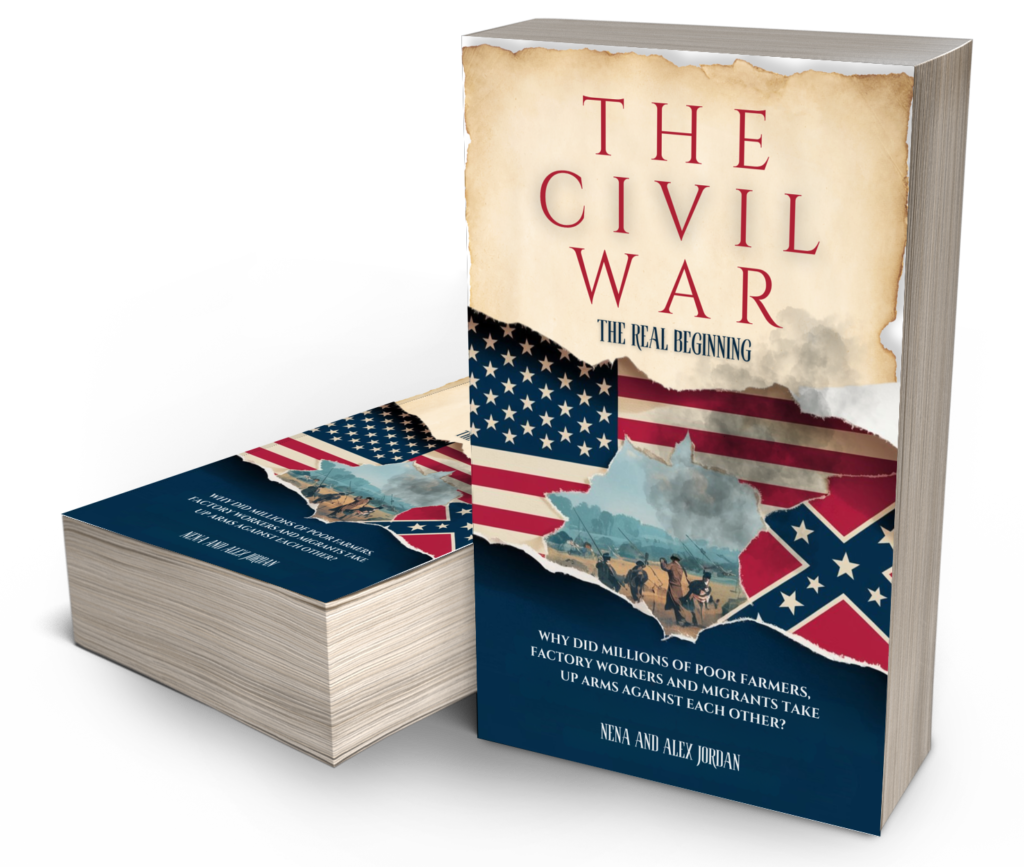
Why Revisiting the Civil War’s Origins Still matters
History shapes how nations understand themselves. When complex events are reduced to single-cause explanations, we lose the ability to recognize . signs in our own time-especially when economic strain, political polarization and constitutional debates reappear in modern forms. Revisiting the origins of the Civil War does not mean excusing or minimizing any injustice. It means seeking clarity, accuracy and a fuller understanding of how nations fracture-and how they might avoid doing so again.
Why Many Americans called it “Mr. Lincoln’s War
Historical memory often portrays Abraham Lincoln through simplified narratives that overlook the political uncertainty and instability surrounding the Civil War era. Abraham Lincoln, Pragmatist examines Lincoln not as a fixed ideological figure, but as a leader responding to rapidly changing military, political, and constitutional realities while attempting to preserve the Union during national crisis.
Featured Book
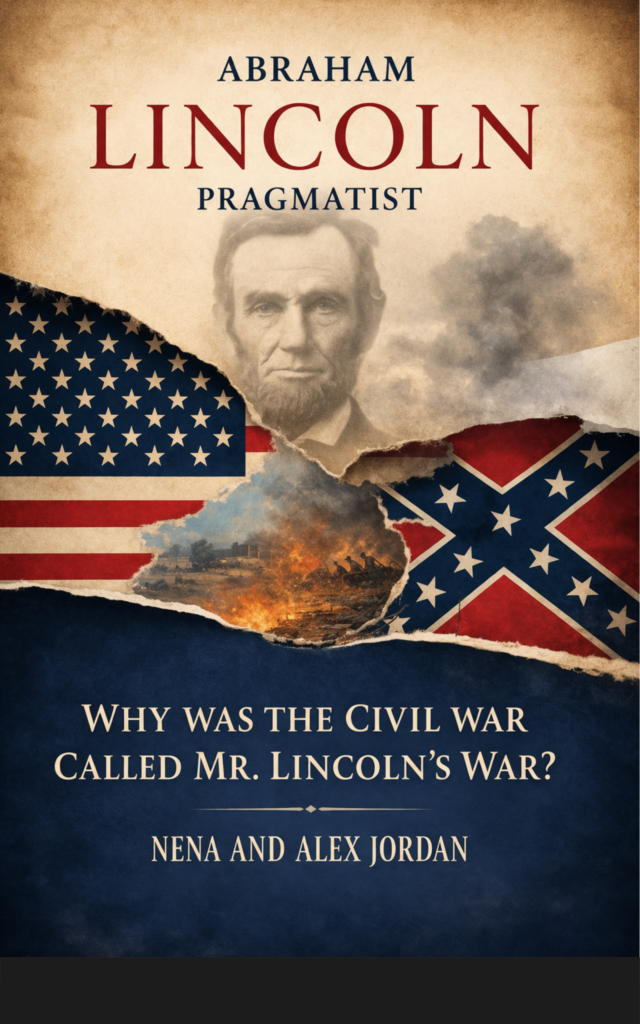
Review: Abraham Lincoln, Pragmatist
Leadership shaped by Crisis, Uncertainty and Political Reality
Abraham Lincoln, Pragmatist examines Lincoln not as a fixed ideological figure, but as a political leader navigating one of the most unstable periods in American history.
Rather than presenting Lincoln through mythology or selective quotation, the book explores the struggle to find a pathway to vocational success plus the practical realities that influenced his decisions before and during the Civil War. Particular attention is given to family instability plus the political pressures facing the Union, the constitutional questions surrounding federal authority, the evolving issue of slavery, and Lincoln’s efforts to preserve national stability under extraordinary circumstances.
The work portrays Lincoln as a pragmatic statesman whose positions developed in response to changing military, political, and social conditions. Readers are encouraged to consider the complexity of leadership during national crisis rather than viewing historical events through simplified modern interpretations.
Written in an accessible style while grounded in historical context, Abraham Lincoln, Pragmatist will be of interest to readers seeking a broader understanding of Lincoln’s presidency, the Civil War era, and the political realities that shaped the United States during the nineteenth century.
Disclosure
ReadNonFiction.com is owned and operated by Lake Region Publishing LLC.
This website contains affiliate links. If you click on an affiliate link and make a purchase, Lake Region Publishing LLC may receive a commission at no additional cost to you.
Lake Region Publishing LLC is a participant in the Amazon Services LLC Associates Program, an affiliate advertising program designed to provide a means for websites to earn advertising fees by advertising and linking to Amazon.com.
As an Amazon Associate I earn from qualifying purchases.
Product recommendations and editorial content are based on independent research and editorial judgment. Affiliate relationships do not influence content decisions.